Loading...
Serving Daytona Beach, FL and surrounding areas. (386) 278-1669
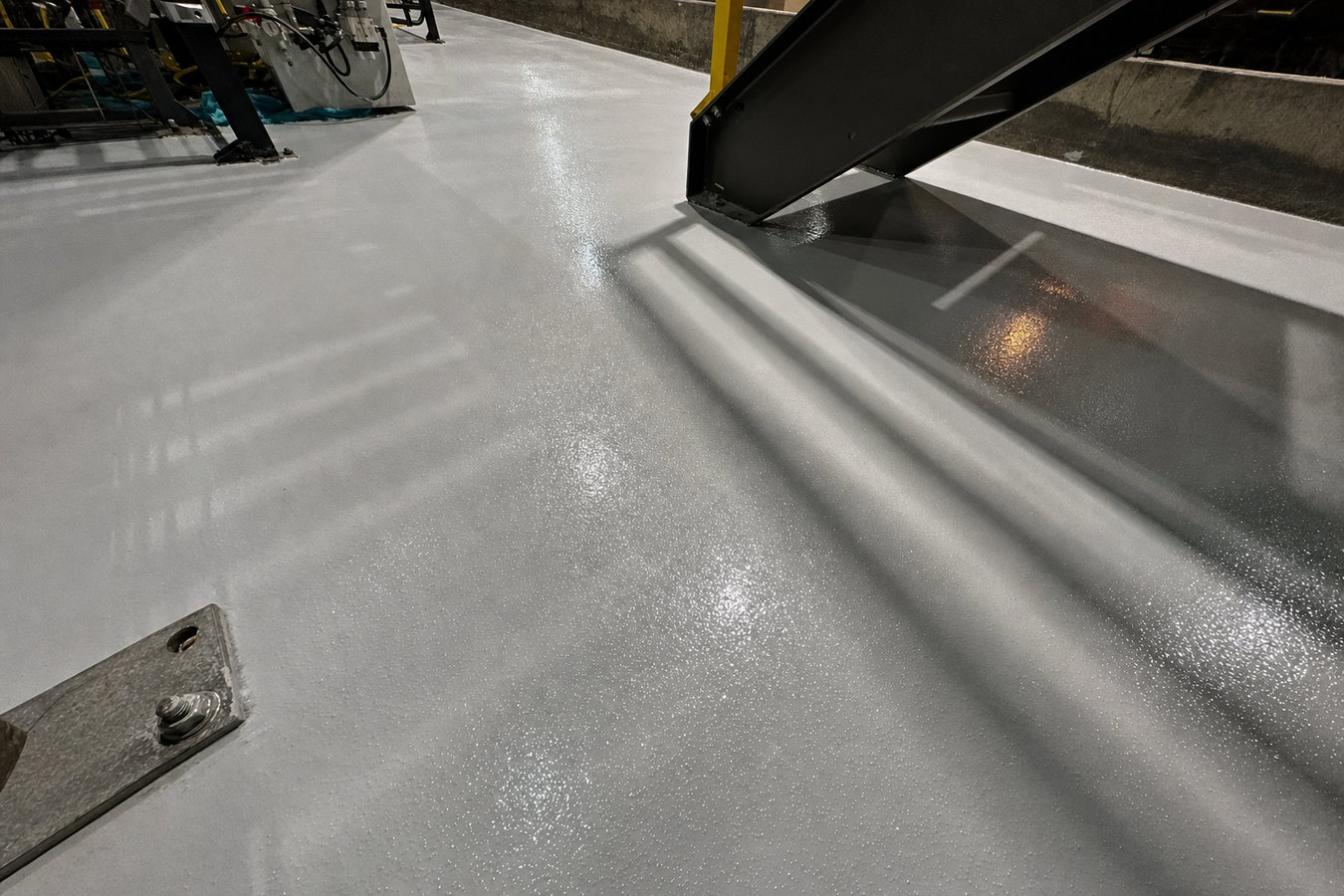
Urethane cement handles Florida's heat, humidity, and moisture better than standard epoxy. If your garage, kitchen, or utility floor keeps failing, this is the fix that holds.
Urethane cement flooring in Daytona Beach is a thick, seamless coating poured directly over an existing concrete slab - it bonds tightly, cures into a single smooth surface, and handles heat and moisture cycling better than most alternatives, with most residential jobs completed in one to three days.
What makes urethane cement different from standard epoxy is its flexibility. Because it contains water-based materials that allow slight movement, it is far less likely to crack, bubble, or peel when temperatures rise and fall - a real advantage in Daytona Beach, where floors heat up fast and humidity is almost always in the air. Homeowners who have watched a painted or epoxy-coated floor fail within a couple of years often find urethane cement to be the long-term answer.
For spaces where appearance matters as much as performance, urethane cement pairs well with options like polished concrete flooring - which uses mechanical grinding to achieve a smooth, reflective surface without a topcoat system. If you are weighing which approach suits your space, an in-person assessment is the most reliable way to find out.
If your concrete floor is chipping in small flakes or has dark stains that will not scrub out, the surface is breaking down. In Daytona Beach's humid climate, bare concrete absorbs moisture, oil, and mold spores over time, making the problem worse each year. A urethane cement coating seals the surface completely and gives you a floor that is easy to wipe clean.
Those white patches - called efflorescence - are mineral deposits left when moisture pushes up through the slab and evaporates at the surface. This is very common in Daytona Beach because of the high water table and sandy soil. It is a clear sign that moisture is actively moving through your slab and must be addressed before any coating is applied.
If you already have an epoxy or painted coating that is starting to bubble or peel, that is almost always a moisture problem working from underneath. Florida's climate makes this failure mode more common here than in drier states, and it tends to get worse each summer. Switching to a urethane cement system installed with proper moisture prep is the most reliable long-term fix.
If you notice a damp smell or feel moisture on the floor after heavy rain, your slab is not adequately sealed against the humidity and groundwater common in coastal Volusia County. Left unaddressed, that moisture creates conditions where mold and mildew can grow under stored items and along baseboards. A properly installed urethane cement floor creates a barrier that stops that cycle.
Urethane cement is most often chosen for its durability in demanding environments - garages, utility rooms, commercial kitchens, and spaces that regularly see heat, moisture, or cleaning chemicals. For clients who want a similar level of protection in a high-visibility space with a distinctive finish, pairing a urethane base with commercial-grade epoxy coatings is an option worth discussing. For clients focused on a polished, high-reflectance aesthetic, we can also coordinate with polished concrete flooring as a finishing step.
Within urethane cement itself, the main choices are coating thickness - from lighter residential systems to thicker, broadcast-aggregate systems designed for heavy use - and the finish level, ranging from a smooth, matte surface to a light texture that adds slip resistance underfoot. We match those choices to your specific space, how you use it, and what conditions it will face over the years ahead.
Best for garages, laundry rooms, and utility spaces where durability and easy cleaning matter more than decorative appeal.
Suited to spaces with heavy foot traffic or equipment - the aggregate broadcast into the topcoat adds grip and resists impact.
Ideal for home gyms, converted garage living spaces, and interior rooms where a cleaner, more polished look is the goal.
Daytona Beach carries some of the highest average humidity levels in Florida, regularly above 75% even in the cooler months. That moisture does not just sit in the air - it pushes up through concrete slabs from below, especially in older homes built on sandy, water-retaining soil. For homeowners, this means a standard epoxy that works fine in a drier climate can start to bubble or lift here within a year. Urethane cement's slight flexibility allows it to move with the slab rather than fight it, making it one of the more reliable long-term choices for Daytona Beach's specific conditions.
The coastal environment adds to this. Homes close to the Atlantic - including those in communities like Holly Hill and New Smyrna Beach - face salt-laden air that accelerates the breakdown of many building materials, including some floor coatings. Urethane cement is one of the more salt-resistant options available. It is also worth noting that Florida requires contractors performing this type of work to hold a state-issued license - you can verify any contractor at the Florida DBPR website before signing anything.
Reach out by phone or the contact form and we will get back to you within one business day. We ask basic questions about the space - size, current use, any visible damage - to understand what we will be walking into.
We come out, measure the floor, inspect the concrete, and test for moisture - a required step in Florida's climate. You receive a written estimate that breaks out every cost clearly before any work begins.
The crew grinds the concrete, repairs any cracks, and applies a moisture barrier if the test shows it is needed. This prep phase is the most important part of the whole job, even though it is the least visible.
The urethane cement is poured and spread in layers, then left to cure - plan for 48 to 72 hours before moving anything back in. Before we leave, we walk you through care instructions and what your warranty covers.
Free in-person estimate with no obligation. We look at your slab, test for moisture, and give you a written quote before any work begins.
(386) 278-1669We test every slab before any coating goes down - not just on jobs where moisture is visibly obvious. In Daytona Beach's climate, skipping this step is the single most common reason floors fail early. This check is included in every estimate at no extra cost.
Every estimate we provide breaks down prep, materials, and labor separately. We do not quote over the phone without seeing the slab, and we do not add charges without talking to you first. The number you agree to is the number you pay.
Many Daytona Beach homes were built in the 1950s through 1980s, and their slabs show it - surface cracks, uneven settling, previous coatings. We address those conditions in the prep phase rather than coating over them, which is how the finished floor holds up for years rather than months.
Our prep and installation practices follow guidance from the American Society of Concrete Contractors and are consistent with Florida Building Code residential standards. Following recognized standards, even when a permit is not required, is what separates work that lasts from work that does not.
The common thread through all of this is accountability. We are a local contractor in Daytona Beach, and our reputation depends on every job holding up. That is the practical reason we do the work the right way.
Mechanically ground and refined concrete that achieves a smooth, reflective finish without adding a separate coating layer.
Learn MoreHeavy-duty epoxy systems for warehouses, commercial kitchens, and industrial spaces that need to handle constant traffic and chemical exposure.
Learn MoreSpots fill up heading into storm season - lock in your project date now so your new floor is done before the next round of summer humidity arrives.