Loading...
Serving Daytona Beach, FL and surrounding areas. (386) 278-1669
Old tile, stubborn adhesive, failing coatings, or paint that will not let go - we strip concrete floors down to bare, clean slab so your next floor actually bonds and stays put.
Concrete floor stripping in Daytona Beach means removing whatever is currently on top of the slab - old tile, vinyl, epoxy coating, glue, paint, or sealers - down to the bare concrete underneath, and most standard residential rooms or garages are complete in one to two days.
The reason this step matters is straightforward: new flooring or coating cannot bond properly to a surface contaminated with old adhesive, paint, or a failed sealer. Contractors call leftover adhesive "ghost lines" - you can see them through new vinyl or tile if they are not fully removed. Daytona Beach adds a layer of complexity because the area's high year-round humidity means bare concrete also needs adequate drying time before anything new goes down. Rushing that window is one of the most common reasons new floors fail in Florida within the first year. If you are planning to apply an epoxy coating after the floor is stripped, the surface profile left by the stripping process directly affects how well that coating bonds.
Homes in Daytona Beach are also more likely than homes in many other parts of the country to have older flooring that contains asbestos in the tile or adhesive. Any home built before the mid-1980s should be tested before stripping begins. This is not a reason to delay a project - it is a straightforward step that a responsible contractor raises early and handles correctly.
If the corners or edges of your floor tiles keep popping up - even after pressing them back down - the adhesive underneath has failed. In Daytona Beach's humid climate, moisture that works its way under the slab or through grout lines is one of the most common reasons adhesive gives out. Laying new flooring over a surface where the old adhesive has already failed will give you the same problem again within a year or two.
If you have pulled up a section of old flooring and the concrete underneath has white crusty deposits or dark moisture stains, the slab has been absorbing water. This is especially common in Daytona Beach homes close to the coast or in low-lying areas near the Halifax River. Those deposits need to be ground off and the surface properly prepared - covering them over leads to the same problem recurring.
If walking across your floor feels like there are soft spots, or if you hear a hollow sound when you tap on tiles, the material underneath has separated from the slab. This is a sign that the old flooring and whatever was used to install it needs to come off entirely before a new surface can be applied. Patching over a floor in this condition rarely holds.
If you want to apply an epoxy coating, a decorative stain, or a polished concrete finish, the existing surface almost certainly needs to be stripped first. Paint, old sealers, and adhesive residue prevent new coatings from bonding to the concrete. Even if the floor looks clean to the naked eye, a contractor will test the surface to confirm readiness - and stripping is usually the answer when it does not pass.
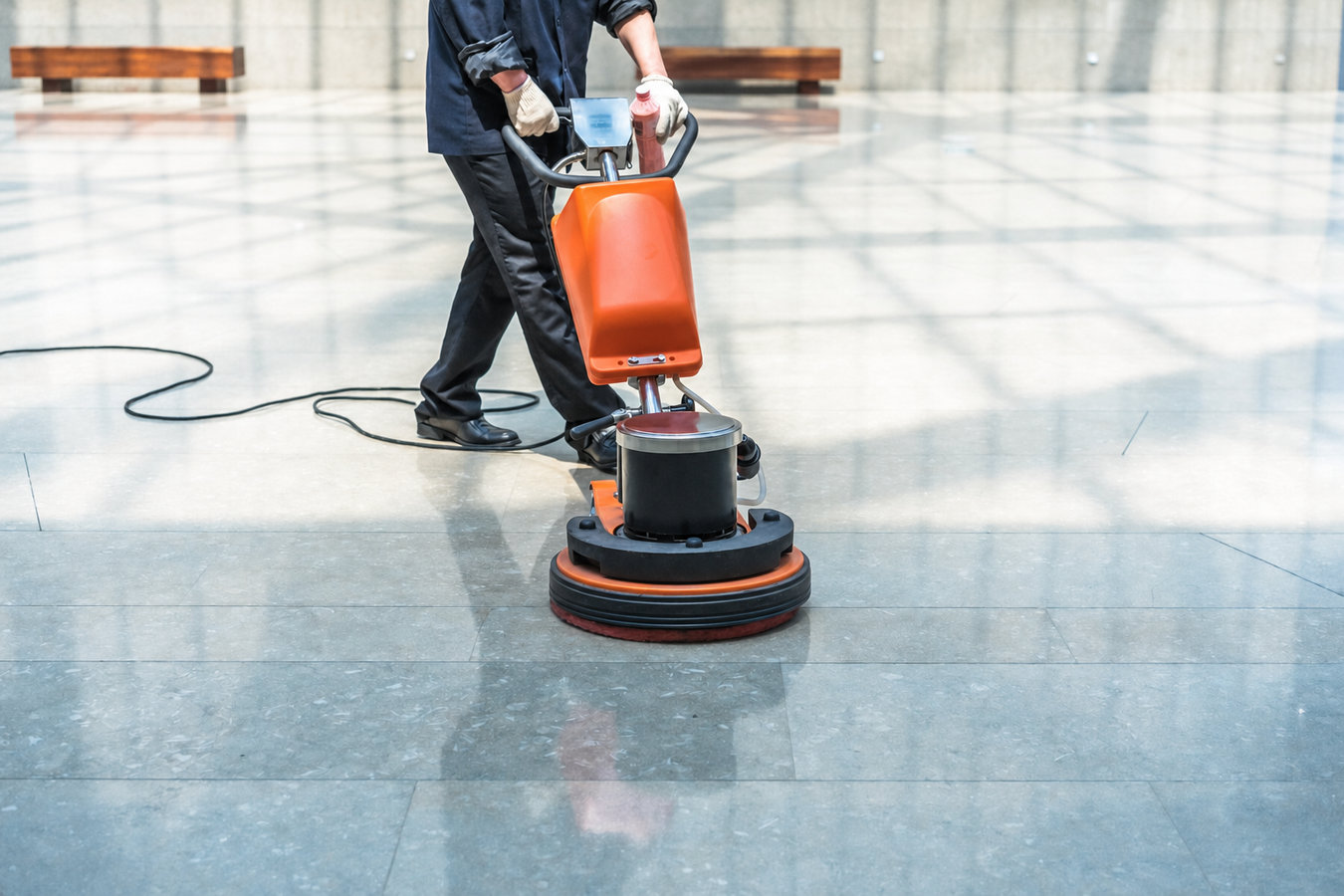
We use grinding machines, shot blasting, and chemical stripping depending on what is being removed and what is going down next. Each method leaves a different surface profile, and the right choice depends on what is on the floor now and what the finished floor requires. Grinding is the most common approach for residential jobs where an epoxy or polished concrete finish is planned afterward - it removes the surface material and creates a texture the new coating can bond to. Shot blasting uses tiny steel beads to blast the surface clean and is well-suited for large flat areas like garages or commercial spaces. Chemical stripping softens old coatings and adhesives so they can be scraped away, which is useful when mechanical methods would be too aggressive for the slab's condition. Every job includes dust containment and full debris removal.
After the floor is stripped and confirmed dry, the next step is usually one of two paths: applying a new coating - such as our epoxy floor coatings or a stained finish - or proceeding with a new floor covering. Our concrete grinding and surface preparation service handles cases where the slab needs further profiling or leveling after the stripping is complete.
Best suited for removing coatings, paint, adhesive, and surface sealers while creating the surface profile that new coatings need to bond correctly.
Ideal for large, flat areas like garages and commercial floors where a uniform surface profile is needed across the full footprint.
A lower-impact approach for removing old coatings when the slab condition calls for a less aggressive method - followed by thorough cleaning and neutralization.
Full removal of existing tile, vinyl, or hardwood flooring along with the adhesive underneath - leaving a flat, clean concrete surface ready for the next step.
A large share of Daytona Beach's residential neighborhoods - including areas like Midtown, the Beachside, and sections of South Daytona - were built between the 1950s and early 1980s. Homes from that era frequently have floor tiles or tile adhesive that contains asbestos. Florida law requires that asbestos-containing materials be handled by licensed professionals, and testing before any stripping work is not just smart - it may be legally required depending on the scope of the project. The Florida Department of Health maintains a list of licensed asbestos inspectors and contractors for homeowners who need to verify proper credentials. We raise this topic before any work begins on older homes - a contractor who does not is one worth questioning. We serve homeowners across South Daytona and Holly Hill, where many of these older concrete block homes are concentrated.
Almost every home in Daytona Beach sits on a concrete slab poured directly on the ground. That means the concrete floor you are stripping is also the structural foundation of your home - there is no subfloor underneath it. Any damage to the slab during stripping is more consequential here than in a home with a wood subfloor, which is why the least aggressive method that gets the job done is always the right choice. Daytona Beach's high humidity also means bare concrete after stripping holds moisture and needs proper drying time before new flooring goes down. Rushing that step in Florida's coastal climate is one of the most predictable causes of new floor failures. For disposal of materials - including those requiring special handling - we follow Florida DEP waste disposal guidelines.
We ask you a few questions about what type of flooring is currently on the floor, roughly how many square feet are involved, and what you plan to put down next. Most contractors will schedule an in-person visit before giving a firm price - a phone quote for this work is a rough estimate, not a commitment.
During the walk-through we look at the existing floor, check for signs of moisture or damage, and ask about the age of the home. If your home was built before the mid-1980s, we raise asbestos testing at this point. You receive a written quote that breaks down labor, debris removal, and any additional prep work separately.
The crew brings in grinding or shot-blasting equipment, sets up dust containment, and begins removing the old surface material. This is the loudest and dustiest part of the job. Plan to keep children and pets out of the work area. We check in at the end of each work day to show you progress and flag anything unexpected.
Once stripping is done, we walk the floor with you before packing up. In Daytona Beach's humid climate, bare concrete needs 24 to 72 hours to dry fully before new flooring or coating is applied - sometimes longer during summer. We give you a specific wait time so you can plan the next step without pressure.
We walk your space, answer your questions, and give you an itemized quote with no obligation.
(386) 278-1669On any Daytona Beach home built before the mid-1980s, we bring up asbestos testing at the assessment visit - not after the crew has already started. We work with licensed testers and follow Florida's requirements for handling any materials that come back positive. This protects your family and keeps the project compliant from the start.
Because Daytona Beach homes sit on slab-on-grade foundations - meaning the concrete floor is also the structural base of your home - we choose the least aggressive stripping method that gets the job done. Overly aggressive grinding on a residential slab can create problems that are harder and more expensive to fix than the original flooring was.
We build Daytona Beach's humidity into the project timeline. After stripping, we give you a realistic drying window based on the season and the moisture level of your slab - not a rushed estimate designed to move to the next job. Rushing this step in Florida is one of the most predictable ways to cause new flooring to fail.
Florida requires contractors doing this work to hold a valid state license, which you can verify on the DBPR license portal in about two minutes. We carry liability insurance and workers' compensation coverage and will provide documentation before work begins.
Floor stripping in Daytona Beach involves decisions that matter more here than in many other markets - the age of the housing stock, the slab-on-grade construction, the year-round humidity, and the need for proper drying time before new materials go down. Getting these steps right is what the job is actually about. The stripped floor is only the starting point.
Once the slab is stripped and dry, epoxy is one of the most durable surface options for garages, utility rooms, and commercial spaces.
Learn MoreWhen the stripped slab needs further profiling or leveling before a new coating goes down, grinding and surface preparation handles that next step.
Learn MoreContractor availability tightens from fall through spring. Reach out now and secure your project date before your window closes.