Loading...
Serving Daytona Beach, FL and surrounding areas. (386) 278-1669
Salt air, summer storms, and UV exposure wear down unprotected concrete fast in Daytona Beach. The right sealer keeps your driveway, patio, and pool deck looking good and lasting longer.
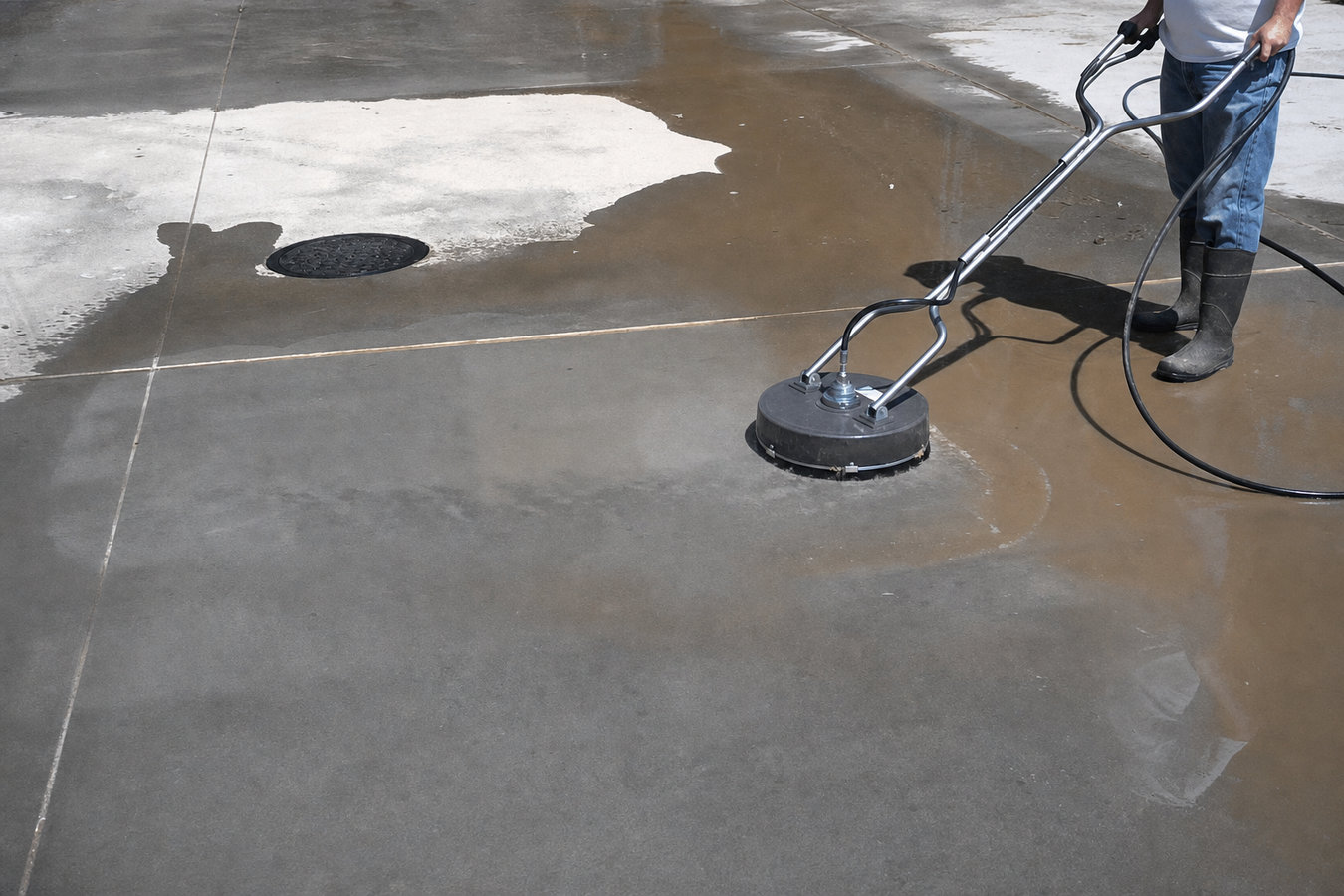
Concrete sealing in Daytona Beach puts a thin protective barrier over your surface that keeps water, oil, salt, and stains from soaking in - most residential driveways and patios are sealed and ready for light foot traffic in a single day.
Unsealed concrete acts like a sponge. In a climate like Daytona Beach's, that means salt air works into the surface every day, summer rain soaks in and breaks the concrete apart from within, and mold and mildew grow on the porous surface after every wet season. The good news is that sealing is one of the least disruptive and most cost-effective things you can do to extend the life of the concrete you already have.
Before we apply any sealer, the surface has to be properly cleaned and prepped - pressure washed, cracks filled, and fully dried. That prep step is where most do-it-yourself sealing jobs fail. If you are also considering a full resurfacing, take a look at our concrete resurfacing and overlays service, which combines surface repair with a fresh finish layer. And for floors that need protective coating before sealing, our polished concrete flooring service gives you a durable, low-maintenance surface that seals easily and looks sharp for years.
Pour a small cup of water onto your driveway or patio. If it soaks in within a minute or two and leaves a dark wet patch, the sealer has worn off. A properly sealed surface makes water bead up and roll away, just like water on a freshly waxed car. This is the single easiest test you can do yourself before calling a contractor.
If you notice dark green or black staining spreading across your concrete after Daytona Beach's summer storm season, that is mold, mildew, or algae taking hold. Unsealed concrete gives these organisms a porous surface to grip onto, and the combination of heat and humidity here makes them grow fast. Once you see streaking, it is a clear sign the surface needs cleaning and resealing before the staining gets worse.
If the top layer of your concrete looks like it is peeling or crumbling in small patches, that is called spalling - and it means water has been getting in and breaking the surface apart from within. In Daytona Beach, the combination of salt air and summer rain speeds this process up considerably. Sealing will not reverse damage that has already happened, but it will stop it from spreading.
Even if your concrete looks fine, sealers wear down gradually and invisibly. In Daytona Beach's climate - with intense sun, salt air, and heavy summer rain - two to three years is a reasonable outer limit before the protection has faded enough to matter. If you cannot remember the last time the surface was sealed, it is worth having a contractor take a look.
We seal driveways, patios, pool decks, garage floors, walkways, and commercial slabs. Every job starts with a thorough surface assessment and a proper prep step - pressure washing, stain treatment, crack filling, and drying time before the sealer goes on. We use products rated for Florida's coastal conditions, including UV-stable sealers for outdoor surfaces and non-slip additives for pool decks and walkways where traction matters.
Sealing is often the finishing step after other concrete work. If your surface has significant damage, we can pair sealing with concrete resurfacing and overlays to repair it first. And if you want a surface that is easy to clean, highly durable, and attractive without a thick coating, polished concrete is a natural companion service that pairs well with a quality sealant. We give you a clear explanation of which sealer type fits your surface and why before any work begins.
Best for driveways, patios, and exterior surfaces that need protection without changing the natural look of the concrete - the sealer soaks in and works from within.
Best for homeowners who want a satin or glossy appearance along with protection - common for garage floors and interior slabs where aesthetics matter.
Best for any wet-zone surface where people walk barefoot or in wet shoes - the non-slip texture is mixed into the sealer so traction is built in, not added after.
Best for surfaces that were previously sealed and are now showing wear - we strip old sealer residue if needed, prep the surface, and apply a fresh coat rated for Daytona Beach's climate.
Daytona Beach averages more than 230 sunny days a year, and salt-laden air blows in off the Atlantic every day. That is a combination that breaks down unprotected concrete faster than most homeowners expect. Homeowners within a mile or two of the beach - where the salt concentration in the air is highest - often notice visible surface deterioration in driveways and patios within just a few years. The Florida Department of Environmental Protection notes that coastal salt exposure accelerates the breakdown of building materials, and concrete is no exception. A UV-stable, salt-resistant sealer is not a luxury for homes in this area - it is basic maintenance.
The other major factor is Daytona Beach's summer rainfall - about 50 inches per year, with most of it falling in intense afternoon storms between June and September. Homeowners in Edgewater and New Smyrna Beach see the same pattern: concrete that holds up fine through the dry season starts to show mold streaking, pitting, or surface cracks in the months following a heavy wet season. Sealing before the rain season starts - typically March through May - gives your concrete the best chance of coming through the summer without visible damage. And in a city where many homes were built in the 1960s through 1980s, having the right contractor apply the right product to aging concrete is the difference between extending its life and replacing it sooner than you should have to.
Tell us what you need sealed - driveway, patio, pool deck, garage floor - and we schedule a free visit to take a look. We reply within one business day and come to you before quoting any price.
We check for cracks, settling, mold, and any old sealer that needs to be stripped. We walk you through what we find and what needs to happen before sealing can begin - no surprises on pricing.
The crew pressure washes the surface, fills cracks, and lets the concrete fully dry. In Daytona Beach's humidity, this can take longer than expected - we allow proper drying time and will not rush it. The sealing itself takes two to four hours for most residential surfaces.
Foot traffic is typically fine after 24 hours. Vehicles stay off for at least 48 to 72 hours. Before we leave, we walk the surface with you and explain how to care for it going forward - including when to plan for the next resealing.
Free estimate, no pressure. We come out, look at your surface, and give you a clear price before any work starts.
(386) 278-1669A sealer that holds up in Minnesota does not necessarily hold up in Daytona Beach. We use products that are rated for high UV exposure, salt-air environments, and the heavy summer rain that characterizes this coast. The Portland Cement Association provides guidance on sealer performance in different climate zones, and we match product selection to your specific surface and its exposure conditions.
Applying sealer over a dirty, damp, or damaged surface is the most common reason sealing jobs fail early. We pressure wash, treat mold and staining, fill cracks, and confirm the concrete is fully dry before we open the first container. In Daytona Beach's humidity, that last step takes longer than it does elsewhere - and we will not skip it.
We have been sealing concrete in the Daytona Beach area since 2018, which means we know which products hold up through summer storm season, which surfaces need a non-slip additive, and how to read a concrete surface that has been through years of coastal exposure. That local experience means fewer surprises for you.
Not every concrete surface needs the same treatment. We will tell you if a simple penetrating sealer is all your driveway needs, and we will also tell you if the surface has damage that should be addressed before sealing makes sense. We do not recommend more work than your specific situation calls for.
Concrete sealing is straightforward work, but the details - surface prep, product selection, and proper drying time - are what separate a job that holds up for three years from one that starts failing after twelve months. We take every step seriously because your concrete is an investment worth protecting.
When sealing alone is not enough - resurface cracked or damaged concrete with a fresh overlay before applying a protective sealant.
Learn MoreA polished finish and quality sealant work together to give you a low-maintenance, highly durable surface that holds up in Daytona Beach's climate.
Learn MoreEvery season you wait is another season of salt air, UV damage, and heavy rain working on your unprotected surface. Call us today and get a free estimate.