Loading...
Serving Daytona Beach, FL and surrounding areas. (386) 278-1669
Uneven floors, dipping slabs, and tiles that keep cracking loose are fixable without a full replacement. We pour and seal floors flat using products built for Florida heat and coastal humidity.
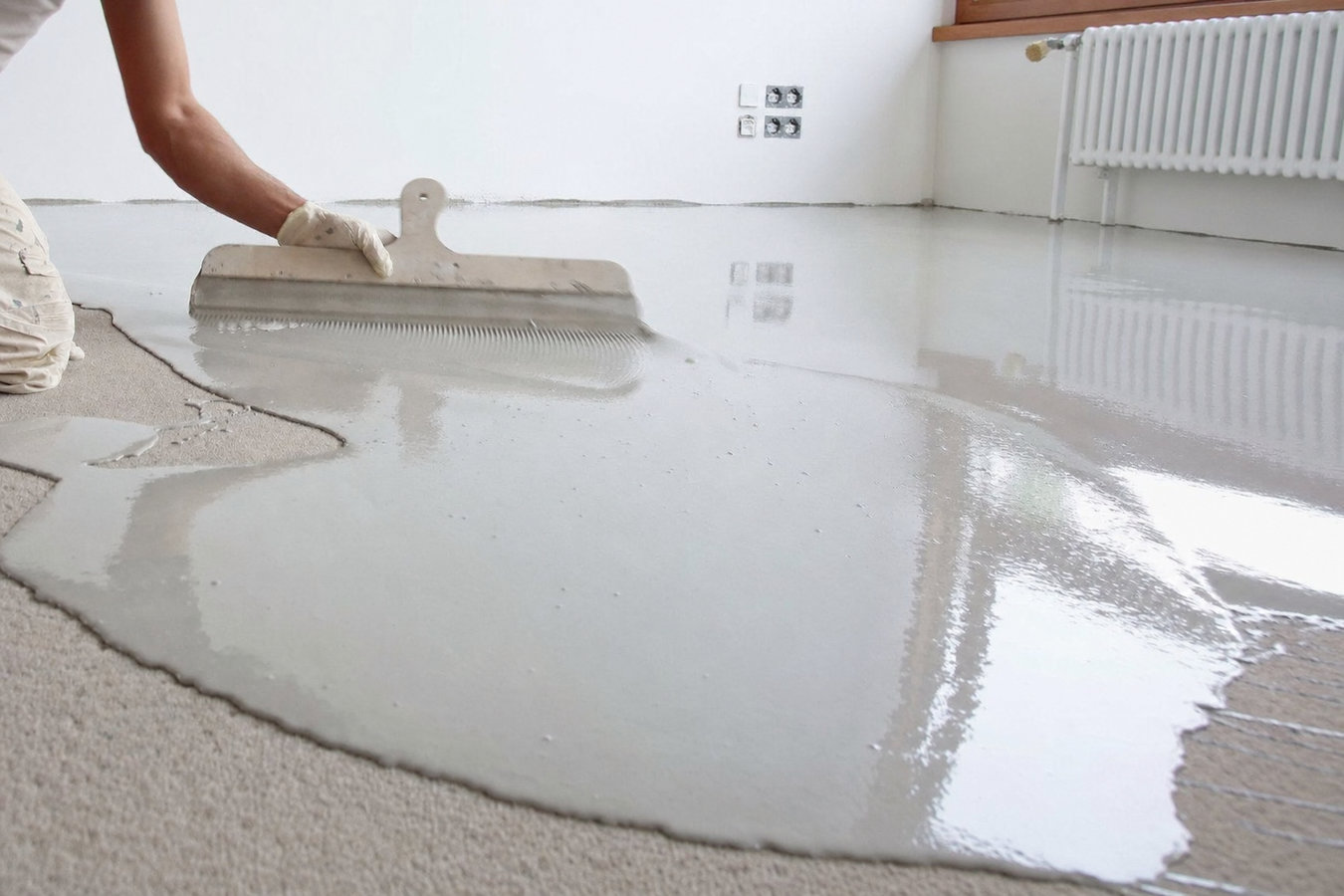
Self-leveling concrete in Daytona Beach is a specially mixed material that flows out across a floor and settles into a smooth, flat surface on its own, and most single-room or garage jobs are complete in one day with the floor walkable the same evening.
Nearly all Daytona Beach homes are built directly on a concrete slab, and Florida's sandy, moisture-rich soil shifts over time. That gradual movement causes slabs to settle unevenly, develop low spots near doorways, or crack along expansion joints in the garage. Self-leveling concrete fills those low spots and brings the floor back to flat - which is also why flooring installers call for it before putting down luxury vinyl plank, large-format tile, or hardwood. If you are dealing with surface wear on top of an otherwise flat slab, our concrete resurfacing and overlays service may be the better starting point.
Self-leveling work is not suitable for every slab. If your floor has cracks where one side has risen higher than the other, or if there is active moisture pushing up through the slab, those issues need to be addressed before new material goes down. An honest assessment before any pour is part of how we work.
Stand in the middle of a room and look toward the baseboards - if the floor appears to slope away from you, or if you can feel a soft dip underfoot near doorways, the slab has likely settled unevenly. This is extremely common in Daytona Beach homes built on sandy soil, where gradual ground movement over decades causes slabs to shift. A self-leveling pour fills those low spots and brings the floor back to flat.
When a slab moves, the tile on top of it moves too - and grout lines are usually the first thing to show it. If you are seeing a pattern of cracked grout running in a line across a room, or individual tiles rocking at the corners, the floor beneath them is no longer flat and stable. Replacing the tiles without addressing the underlying unevenness just means the same thing will happen again within a few years.
Salt air, years of moisture, and general wear can leave a concrete floor looking rough and pitted - especially in garages and screened porches near the coast. If the surface feels gritty underfoot or you can see small craters and flaking patches, an overlay applied over the cleaned slab gives you a fresh, sealed surface without the cost of a full replacement.
Luxury vinyl plank, hardwood, and large-format tile all require a very flat subfloor to install correctly. If your installer has told you the floor needs to be leveled before they can proceed - or if a previous installation developed gaps, buckling, or uneven seams - self-leveling concrete is the standard fix. Getting this step right before the new floor goes down saves you from tearing out expensive material later.
We offer self-leveling underlayment pours for floors that have settled unevenly and need to be brought back to flat before any surface work or new flooring goes on top. For floors that are already flat but worn, pitted, or stained at the surface, a thin decorative overlay is often the right choice - it can be tinted, textured, or finished to look like polished concrete, stone, or tile. Both approaches start with a thorough slab assessment that checks for moisture, stability, and existing cracks, because skipping that step is what leads to overlays that peel or crack within a year.
For outdoor areas like pool decks, lanais, and garage aprons, we connect this work to our pool deck coatings and resurfacing service when slip resistance and UV-stable color are part of what the surface needs. And for homeowners whose primary concern is restoring a worn driveway or patio surface without leveling, our concrete resurfacing and overlays page covers that path in detail.
Best suited for slabs that have settled and developed uneven low spots, dips near doorways, or surfaces that need to be flat before new flooring is installed.
Ideal for floors that are flat but worn, stained, or pitted - this thin layer refreshes the surface and can be finished with color, texture, or a polished look.
For slabs with surface cracks and minor settling, we fill and stabilize first, then apply a leveling pour - addressing the cause before covering it.
Specifically for homeowners installing luxury vinyl plank, tile, or hardwood - a flat, leveled slab ensures the new floor installs correctly and stays that way.
Daytona Beach and the surrounding area have a large stock of homes built between the 1950s and 1980s, most of them on slab-on-grade foundations. Slabs from that era are now 40 to 70 years old, and Florida's sandy, shifting soil has had decades to cause gradual settlement. The result is floors that dip near doorways, garage slabs that have cracked along expansion joints, and tile grout patterns that keep breaking no matter how many times they are repaired. Add in the coastal proximity that brings salt air and humidity into the slab itself over time, and you have a set of conditions that make self-leveling concrete one of the most requested services we provide. The American Concrete Institute notes that moisture vapor emission from slabs is one of the leading causes of floor system failures - and in Daytona Beach's climate, that is not an abstract concern.
We work across Volusia County, including homeowners in South Daytona and Deltona who are dealing with the same combination of aging slabs, sandy soil settlement, and humidity that shows up in concrete floors across the region. If your floor has been slowly getting worse for years, a one-day leveling job is almost always a better investment than waiting until it affects door frames and adjacent rooms.
Tell us roughly what you are working with - which room, garage, or area, and what the floor looks or feels like now. We will schedule a visit and typically reply within one business day.
We walk the floor with a straightedge, check for moisture coming up through the slab, and identify any cracks or soft spots. You leave this visit with a clear scope of work and a written estimate - no guessing at the price.
We grind or mechanically clean the existing floor to remove paint, adhesive, grease, or loose material and create a surface the new compound can grip. This grinding phase is the noisiest part of the job and typically takes one to three hours.
The self-leveling compound is mixed and poured, guided to the right thickness with a gauge rake. It firms up within 30 to 60 minutes. Before we leave, we walk the finished floor with you and give you a written curing timeline - usually walkable same day, full use within 24 to 72 hours.
Free in-home assessment, written estimate, and an honest answer about whether your slab is a good candidate - before any work begins.
(386) 278-1669Daytona Beach's humidity and Florida's water table mean moisture vapor pushing up through a slab is a real and common problem - not a theoretical one. Before any compound goes down, we test the slab for moisture emission. If the level is too high, we address it first rather than pouring over the problem and letting it cause a failure six months later.
A large share of homes in this area were built in the 1950s through 1970s, and their slabs come with a predictable set of characteristics - settlement patterns, crack types, and moisture behavior that a contractor new to the area will not have encountered in volume. We have worked on enough of these homes to know what to look for before we start.
Self-leveling concrete is not a solution for every floor problem. If your slab has shifted structurally - meaning one side of a crack sits higher than the other, or the foundation itself is moving - we will tell you that before we take your money. The American Society of Concrete Contractors sets clear guidance on surface preparation standards, and we follow them.
Exterior self-leveling work - garage aprons, lanais, pool deck areas - needs dry conditions to cure correctly. We plan outdoor projects around Daytona Beach's rainy season, which runs June through September, and schedule indoor pours during cooler morning hours in summer to avoid heat affecting the pour. You should not have to guess whether the weather will cooperate.
These are not just talking points - they are the specific things that determine whether a self-leveling concrete job lasts 15 years or fails in 18 months. Call us or send a message and we will start with an honest conversation about your floor.
When pool deck areas need both a flat surface and a non-slip, UV-stable finish, this service combines leveling and coating in a single project designed for wet Florida conditions.
Learn MoreFor slabs that are already flat but worn, stained, or rough on top, a resurfacing overlay gives the surface a fresh appearance and protective seal without a full leveling pour.
Learn MoreOutdoor slots book up before the rainy season - request a free estimate now and we will get your project on the calendar.